
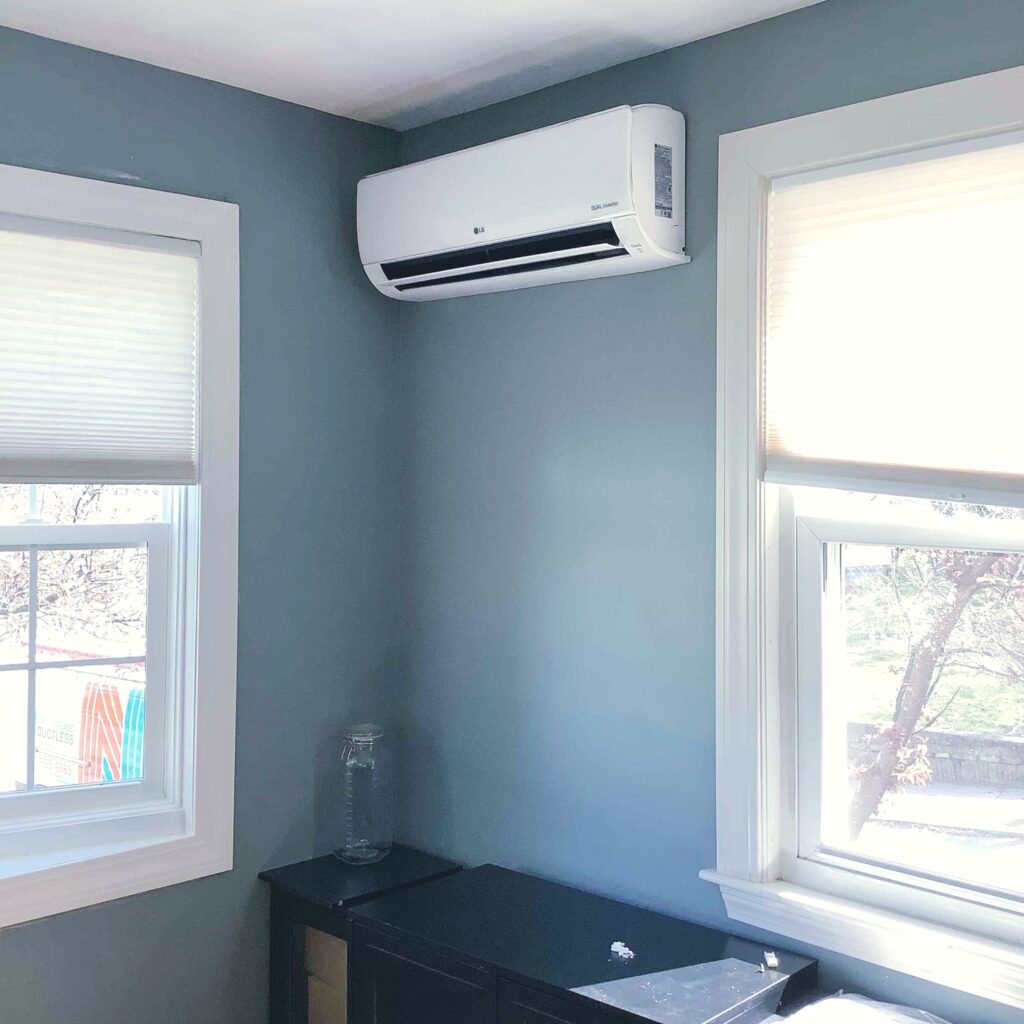
A wall-mounted air conditioner transfers heat from inside a room to the outside through a continuous refrigerant cycle. The indoor air handler pulls in warm room air, cools it across evaporator coils, and blows conditioned air back into the room. At the same time, chemical refrigerant absorbs the heat energy, travels outdoors through flexible copper lines, and releases that heat into the outdoor air.
Many homeowners ask how a wall-mounted air conditioner works before choosing a cooling system for their home. A ductless setup provides direct zonal cooling without requiring large sheet metal ductwork inside walls or attics. Traditional ducted systems can lose a meaningful share of cooling energy through leaks and conduction in the ductwork itself, while wall-mounted systems condition spaces directly at the point of use. A single three-inch hole through an exterior wall connects the indoor air handler to an outdoor condenser. This direct connection eliminates duct-related energy loss and delivers exact temperature control for individual rooms.
Key Components of a Wall-Mounted A/C System
Every wall-mounted ductless setup relies on three main components to manage indoor temperatures. Each component performs a specific role in the refrigeration cycle to keep your living space cool and dry. Knowing how these parts function makes system operation and routine maintenance straightforward.
The Indoor Wall-Mounted Air Handler
The indoor unit mounts high on an interior or exterior wall to maximize airflow coverage. It contains an evaporator coil, a quiet blower fan, air filters, and temperature sensors. The blower fan draws warm air through washable air filters to remove dust and debris. As the air passes over the cold evaporator coil, liquid refrigerant absorbs heat and moisture. The unit collects condensation in a drain pan and sends the cooled, dehumidified air back into your room. Indoor units typically operate at sound levels between 19 and 25 decibels, quiet enough to run unnoticed in a bedroom or office.
The Outdoor Condenser Unit
The outdoor unit sits outside your home on a pad or wall bracket. It houses the compressor, condenser coil, expansion valve, and fan. The compressor acts as the pump for the system, compressing warm refrigerant gas and raising its pressure and temperature. The outdoor fan then blows outdoor air across the condenser coil to release the heat into the atmosphere. Outdoor condensers typically generate noise levels between 50 and 58 decibels.
The Connecting Conduit Line Set
A narrow conduit line passes through a three-inch wall opening to connect the indoor and outdoor units. This bundle contains copper refrigerant pipes, a power supply cable, digital communication wiring, and a condensate drain hose. The line set allows the indoor and outdoor units to communicate continuously while transferring heat energy outside.
How Does a Wall Mounted Air Conditioner Work to Control Temperature and Efficiency?
Understanding how a wall-mounted air conditioner works helps clarify how these systems achieve higher efficiency than traditional window units or central systems. Modern ductless units rely on inverter technology to maintain precise room temperatures while keeping energy use low.
System Sizing and Capacity
Selecting the right unit capacity requires precise heat load calculations. Technicians evaluate room square footage, ceiling height, window placement, and insulation values to size the equipment correctly. Cooling capacity is measured in British Thermal Units per hour. An undersized unit runs constantly without reaching the target temperature, causing excessive mechanical wear. An oversized unit cools the room too quickly without running long enough to remove moisture, leaving the air damp and uncomfortable.
Energy Efficiency and Inverter Technology
Traditional cooling systems turn on and off at full power, creating temperature swings and electricity spikes. Modern wall-mounted systems use variable-speed inverter compressors instead. The compressor adjusts its speed in tiny increments based on real-time room demand, and when the room reaches your target setting, the inverter reduces motor speed rather than shutting off completely.
When considering a single-zone or multi-zone ductless A/C system, homeowners should evaluate system design alongside long-term operating efficiency.
Installation Factors and System Trade-Offs
While wall-mounted air conditioners offer high efficiency and zonal control, homeowners should weigh both the benefits and trade-offs before installation.
Placement Guidelines
Proper indoor and outdoor placement directly affects operating efficiency and equipment lifespan. Technicians mount indoor units high on the wall, usually at least six feet above the floor, since high placement allows cool air to settle naturally throughout the room without blowing directly on occupants. Placing the air handler away from direct sunlight or heat sources prevents inaccurate thermostat readings. Outdoor condensers require at least twelve inches of clearance around air intakes to discharge heat properly, and elevating the outdoor unit on brackets protects it from snow accumulation and ground debris during New England winters.
Equipment Trade-Offs
Wall-mounted systems require a higher initial equipment purchase cost compared to portable or window A/C units. However, they operate with significantly lower electrical demand and longer service lifespans. Another consideration is interior wall aesthetics, since the indoor air handler remains visible on the wall space of your room. Some homeowners prefer the hidden look of traditional ducted vents, but avoiding invasive ductwork installation in older homes or historic properties often outweighs the visual presence of a wall unit.
Homeowners planning a cooling upgrade can review our mini-split cooling installation services to explore custom system layouts.
Understanding the Complete Operating Cycle
To summarize how a wall-mounted air conditioner works, the entire process follows four repeatable thermodynamic steps:
- Evaporation: Warm indoor air flows across the indoor evaporator coil. Cold liquid refrigerant inside the coil absorbs room heat and evaporates into a low-pressure gas.
- Compression: The low-pressure gas travels through copper tubing to the outdoor compressor. The compressor increases the gas pressure, raising its temperature significantly.
- Condensation: The hot gas passes into the outdoor condenser coil. The condenser fan blows outside air across the coil, releasing heat into the outdoor air and condensing the gas back into a liquid.
- Expansion: The liquid refrigerant flows through an expansion valve, which drops its pressure and temperature rapidly. The chilled liquid refrigerant returns to the indoor air handler to start the cycle again.
By continuously running this closed cycle, a wall-mounted A/C unit maintains comfortable indoor temperatures with minimal energy consumption.
Professional Ductless A/C Services in New England
Selecting and installing a ductless system requires skilled load calculations, proper line sizing, and accurate placement. New England Ductless provides professional cooling assessments and installation services across our local service areas. Our experienced technicians evaluate your room dimensions, insulation levels, and layout to help you select the right equipment for your home. Contact New England Ductless to discuss your home cooling requirements with our technical team.